ICCnotes

Inherited Cardiac Conditions reference

Open this condition in the interactive app →

Long QT Syndrome (LQTS)

Quick Summary

Definition: An inherited cardiac channelopathy of delayed myocardial repolarisation, manifest as QT prolongation and a predisposition to torsades de pointes and sudden death.[1]

  • Prevalence: 1 in 2,000-2,500 (commonest inherited arrhythmia syndrome)[1]
  • Key genes: KCNQ1 (LQT1, exercise), KCNH2 (LQT2, auditory/emotion), SCN5A (LQT3, sleep)
  • Hallmark: QTc ≥480ms (repeated ECGs) or ≥500ms (single), Torsades de Pointes, syncope/SCD
  • High-risk markers: QTc >500ms, prior cardiac arrest/syncope, LQT2/LQT3 genotype, female (LQT2)
  • First-line Mx: Beta-blockers (nadolol/propranolol), avoid QT-prolonging drugs, ICD if high-risk, avoid swimming alone (LQT1)

Aetiology

Monogenic (Mendelian): ~75–80%, KCNQ1, KCNH2 and SCN5A account for ~90% of genotyped cases[1]

Acquired: acquired long QT (QT-prolonging drugs, hypokalaemia/hypomagnesaemia, bradycardia) is a separate, reversible entity to exclude[1]

Complex (likely polygenic): ~20–25% gene-elusive, partly reflecting polygenic QT modulation[8]

Genetics

Inheritance: Autosomal dominant (Romano-Ward syndrome, penetrance 25–75% for QTc >460ms); rare autosomal recessive (Jervell-Lange-Nielsen syndrome with congenital deafness, homozygous/compound heterozygous KCNQ1 or KCNE1 variants, nearly 100% penetrance).

Genetic yield: ~75% with comprehensive testing. Up to 25% are gene-elusive, but phenotypic severity mirrors genotype-positive LQTS in these patients (Asatryan et al 2024, Circ Arrhythm Electrophysiol)[8]

ClinGen-validated genes:

GeneSubtype% Genotype+Channel / MechanismArrhythmic Triggers
KCNQ1LQT1~50%IKs loss-of-function (K⁺)Exercise, swimming, adrenergic-dependent
KCNH2LQT235–40%IKr loss-of-function (K⁺)Auditory triggers, emotion, postpartum; higher risk in females
SCN5ALQT3~10%INa gain-of-function (Na⁺ delayed inactivation)Rest/sleep, bradycardia; mexiletine genotype-specific benefit
CALM1/2/3Calmodulinopathy<1%Calmodulin (impaired Ca²⁺-channel inactivation)Often de novo; extreme QTc; severe early-onset, high arrhythmic risk; neurodevelopmental features
TRDN<1%Triadin; autosomal recessiveExercise-triggered; T-wave abnormalities at rest
CACNA1CLQT8 (Timothy)RareICaL gain-of-function (Ca²⁺)Multiorgan syndrome: ASD, autism, syndactyly; very rare

Gene-elusive LQTS (~11–25%): Multiple mechanisms, polygenic risk score contribution, environmental QTc modulators, exercise-induced repolarisation abnormalities, new causal genes not yet identified, or variant reclassification over time. Management mirrors genotype-positive LQTS. Referral to specialised cardiogenetic clinic recommended (Asatryan et al 2024)[8].

Modifier genes: Common variants modulate QTc and arrhythmic risk in individual patients, polygenic risk scores can refine risk stratification beyond the primary pathogenic variant (Schwartz & Crotti, NEJM 2025).

Genotype-Specific Management (Zhu et al 2024, Schwartz & Crotti NEJM 2025)[7][2][9]
SubtypeGene% LQTSTriggersECG PatternKey Management Points
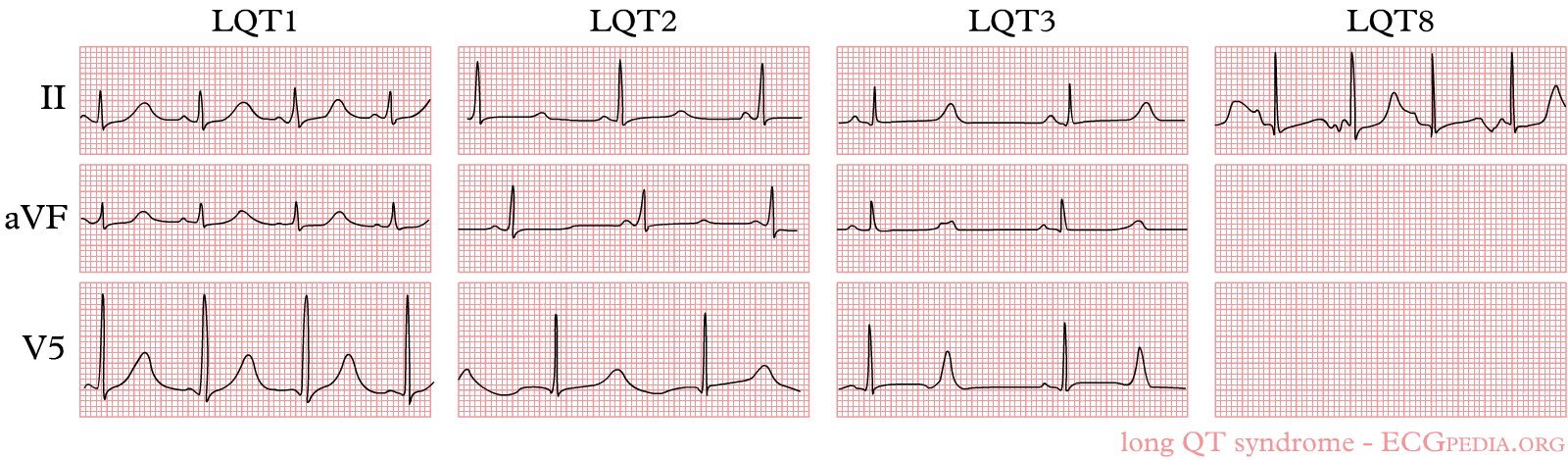
LQT1 KCNQ1 ~50% Exercise, swimming (adrenergic) Broad-based T wave Beta-blockers most effective; nadolol preferred; restrict competitive swimming
LQT2 KCNH2 35–40% Auditory triggers, emotion, postpartum Notched/bifid T wave Higher risk in females; avoid alarm clocks; K⁺ supplementation; beta-blockers effective
LQT3 SCN5A ~10% Rest/sleep, bradycardia Long isoelectric ST segment Mexiletine (off-label): shortens QTc, reduces events; beta-blockers less effective; pacemaker in selected cases
Calmodulinopathies CALM1/2/3 <1% Variable; often de novo Extreme QTc prolongation Very high risk; early ICD; consider LCSD; flecainide may have role; specialist centre

Prevalence

Estimated prevalence 1 in 2,000 to 1 in 2,500 in the general population; actual prevalence may be higher due to variable penetrance, silent mutation carriers, and under-diagnosis[7]

More common in females for arrhythmic events (especially LQT2); variable penetrance, many carriers have QTc within normal range

LQTS accounts for ~54% of sudden unexplained deaths in individuals under 35 years[7]

Autosomal dominant forms (Romano-Ward): first-degree relatives have 50% probability of carrying the pathogenic variant, cascade genetic screening is therefore essential[7]

At least 17 genes have been associated with LQTS; LQT1 (KCNQ1), LQT2 (KCNH2), and LQT3 (SCN5A) account for ~80–90% of genotype-positive cases[7]

Diagnostic Criteria

LQTS Diagnostic Criteria (Schwartz Score[3])

Definite LQTS if ANY of the following:

  • QTc ≥500 ms on repeated ECGs (in absence of secondary causes)
  • QTc ≥480 ms with unexplained syncope
  • Pathogenic LQTS variant identified (regardless of QTc)
  • Schwartz Score ≥3.5

Schwartz Score Components:

Criterion Points
ECG Findings
QTc ≥480 ms 3
QTc 460-479 ms 2
QTc 450-459 ms (males only) 1
Torsades de pointes 2
T-wave alternans 1
Notched T-wave in ≥3 leads 1
Clinical History
Syncope with stress/emotion 2
Syncope without stress 1
Family History
Definite LQTS in family 1
Unexplained SCD <30 years in family 0.5

Interpretation: ≥3.5 = High probability; 2-3 = Intermediate; ≤1 = Low probability

Always measure QTc in multiple leads; use Bazett's formula (QTc = QT/√RR)

Gene-Elusive LQTS: Key Pitfalls (Asatryan et al, Circ Arrhythm Electrophysiol 2024)[8]

11–25% of LQTS patients have negative genetic testing. Severity mirrors genotype-positive LQTS, manage equally.

  • Most common error: Including U waves in QTc measurement → overestimation of borderline QTc. Anterior T-wave inversion in ~20% of LQTS, can mislead.
  • Exercise testing: QTc at 4-min recovery ≥445 ms = 90% sensitivity AND specificity for LQTS. Perform off beta-blockers for best diagnostic yield.
  • Do not reduce management intensity because genetics is negative, cascade ECG screening of all 1st-degree relatives still applies.
  • 16% of patients referred to LQTS centres for second opinion ultimately did NOT have LQTS. Expert cardio-genetic review is essential.

Diagnosis

LQTS ECG Patterns by Genotype

ECG patterns in Long QT Syndrome: LQT1 (broad-based T-waves), LQT2 (low amplitude/notched T-waves), LQT3 (late-onset peaked T-waves), LQT8 (Timothy syndrome). Source: ECGpedia.org

ESC 2022 Guidelines - LQTS Diagnostic Criteria & Management

Diagnostic Criteria (ESC 2022):

LQTS is diagnosed (Class I) if:

  1. QTc ≥480 ms in repeated 12-lead ECGs (with or without symptoms), OR
  2. Pathogenic mutation present (irrespective of QT duration)

LQTS should be considered (Class IIa) if:

  • QTc ≥460 ms and <480 ms in repeated ECGs + arrhythmic syncope (excluding secondary causes)

Key Management Recommendations (Class I):

Intervention Indication
General measures • Avoid QT-prolonging drugs
• Correct electrolyte abnormalities
• Avoid genotype-specific triggers
Beta-blockers Non-selective beta-blockers (nadolol/propranolol) for documented QT prolongation
Mexiletine LQT3 patients with prolonged QT interval
ICD Cardiac arrest survivors
LCSD Symptomatic when: (a) ICD contraindicated/refused, OR (b) Multiple ICD shocks/syncope due to VA

Class IIa Recommendations:

  • Beta-blockers for pathogenic mutation carriers with normal QTc
  • ICD for symptomatic patients despite beta-blockers and genotype-specific therapies
  • Either ICD or LCSD when beta-blockers/genotype-specific therapies not tolerated/contraindicated
  • 1-2-3 LQTS Risk Calculator to calculate individualized SCD risk

Class IIb Recommendations:

  • ICD may be considered in asymptomatic high-risk patients (per 1-2-3 calculator) plus genotype-specific therapies

Class III (NOT recommended):

  • Routine epinephrine challenge testing
  • Invasive electrophysiologic study

Reference: Zeppenfeld K et al. 2022 ESC Guidelines for management of patients with ventricular arrhythmias and prevention of sudden cardiac death. Eur Heart J 2022;43:3997-4126[1]

Clinical Presentation:

  • Often asymptomatic - diagnosed on screening or incidental ECG
  • Syncope (often misdiagnosed as seizure)
  • Cardiac arrest / sudden death
  • Palpitations (may precede syncope)

Genotype-specific triggers:

  • LQT1: Exercise (especially swimming)
  • LQT2: Auditory triggers (alarm clock, phone), emotions, postpartum
  • LQT3: Rest, sleep

Important: Exclude secondary causes before diagnosing congenital LQTS (electrolyte abnormalities, medications)

Investigations

First-line:

  • Resting 12-lead ECG (QTc measurement, T-wave morphology)
  • Repeat ECGs (QTc can vary)
  • 24-hour Holter monitoring (QTc during sleep, T-wave alternans)
  • Exercise stress test (QTc during recovery, paradoxical QT prolongation in LQT1)

Provocation tests (specialist centres):

  • Epinephrine challenge test (can unmask LQTS, particularly LQT1)

Genetic testing:

  • Recommended in all with high clinical suspicion
  • Enables genotype-specific management
  • Facilitates family cascade screening

Exclude secondary causes of QT prolongation:

  • Medications (check www.crediblemeds.org)
  • Electrolyte abnormalities (K+, Mg2+, Ca2+)
  • Hypothyroidism, bradycardia, structural heart disease

Treatments

Class I Recommendations (Expert Consensus 2013)

RECOMMENDED for all LQTS patients:

  1. Lifestyle: Avoid QT drugs (CredibleMeds.org), correct electrolytes
  2. Beta-blockers if: (a) Asymptomatic with QTc ≥470 ms, OR (b) Symptomatic
  3. LCSD if: ICD refused/contraindicated OR beta-blockers ineffective
  4. ICD for cardiac arrest survivors
  5. Clinical expert evaluation for competitive sports

Class IIa (Can be useful):

  • Beta-blockers for asymptomatic with QTc ≤470 ms
  • ICD for recurrent syncope on beta-blockers
  • LCSD for breakthrough events on therapy

Lifestyle modifications (all patients):

  • Avoid QT-prolonging drugs (check www.crediblemeds.org)
  • Maintain normal electrolytes (K+ 4-5 mmol/L)
  • Avoid loud alarms/sudden awakening (LQT2)
  • Genotype-specific restrictions (avoid swimming in LQT1)

Medical therapy:

  • Beta-blockers (Grade I, all symptomatic; Grade IIa, asymptomatic high-risk[1]): Highly effective in LQT1/LQT2; less so in LQT3. Reassess annually (Schwartz & Crotti, NEJM 2025[2]).
    • Nadolol (preferred, long-acting, once/twice daily, consistent levels[4]):
      • Start 40 mg once daily → target 80–160 mg once daily (up to 3 mg/kg/day in children)
      • UK: Available via SPECIALS / named patient import, arrange in advance through hospital pharmacy
      • Renally cleared, reduce dose if eGFR <50 ml/min; avoid if eGFR <30
    • Propranolol (alternative, especially in children or if nadolol unavailable):
      • Start 20–40 mg two to three times daily → target 80–160 mg twice daily (total 160–320 mg/day)
      • Paediatric: 2–4 mg/kg/day in 3–4 divided doses
      • Short-acting formulation available; longer-acting (LA/SR) preferred for compliance
    • Bisoprolol (alternative if nadolol/propranolol not tolerated): 2.5–10 mg once daily, note less evidence specifically for LQTS
  • Mexiletine (LQT3-specific, Grade IIa, off-label[1]): Sodium channel blocker, reduces persistent INa, shortens QTc in SCN5A-positive LQT3.
    • Start 50–100 mg three times daily with food → target 150–200 mg three times daily
    • Maximum 900 mg/day; check QTc after dose changes (should shorten in LQT3)
    • Monitor LFTs; avoid if significant hepatic impairment
  • Potassium supplementation/replacement: Target K⁺ 4.5–5 mmol/L in LQT2 (IKr current hypersensitive to hypokalaemia). Oral KCl supplements or dietary advice; IV replacement if hospitalised.
  • Avoid in all LQTS: QT-prolonging drugs (check www.crediblemeds.org), hypokalaemia, hypomagnesaemia, high-dose diuretics, sudden bradycardia.

ICD therapy:

  • Secondary prevention after cardiac arrest
  • Primary prevention if syncope on beta-blockers or very high-risk features

Left cardiac sympathetic denervation (LCSD):

  • For patients with recurrent events despite beta-blockers
  • ICD contraindicated or declined

Complications

  • Torsades de pointes: causing syncope, seizures, aborted cardiac arrest and sudden death, with genotype-specific triggers (LQT1 exertion and swimming, LQT2 auditory and postpartum, LQT3 rest and sleep)[1]
  • Postpartum arrhythmia surge: particularly in LQT2
  • ICD-related complications: inappropriate shocks and lead failure over decades in young patients

Risk Stratification

High-risk features (consider ICD):

  • Cardiac arrest survivor (secondary prevention)
  • Syncope despite adequate beta-blocker therapy
  • QTc >500ms
  • LQT2 or LQT3 genotype with high-risk features
  • Female with LQT2 in postpartum period

Beta-blocker therapy indicated:

  • All symptomatic patients (syncope, cardiac arrest)
  • Asymptomatic with QTc >470ms (females) or >450ms (males)
  • Some advocate beta-blockers for ALL genotype-positive individuals

Risk modifiers:

  • LQT1: Male sex protective; events common during exercise/swimming
  • LQT2: Female sex higher risk; postpartum period very high risk (continue beta-blockers)
  • LQT3: Male sex higher risk; events during sleep
  • QTc >500ms = very high risk regardless of genotype

Pregnancy Management

ESC 2018 Pregnancy Guidelines - LQTS (mWHO Class II-III)

PRECONCEPTION COUNSELLING:

  • Risk stratification:
    • LQT1, asymptomatic, QTc <500ms, on beta-blocker: mWHO II (low-moderate risk)
    • LQT2: mWHO III (high risk) - highest cardiac event risk in pregnancy and especially POSTPARTUM
    • LQT3, symptomatic LQTS, QTc >500ms, ICD: mWHO III (high risk)
  • Pregnancy-specific risks:
    • LQT2: 2.7-fold increased arrhythmic event risk during pregnancy; 4.6-fold in first 9 months postpartum (HIGHEST RISK GENOTYPE)
    • LQT1: Low risk during pregnancy (progesterone shortens QT); postpartum risk minimal
    • LQT3: Intermediate risk; bradycardia during sleep may worsen arrhythmia substrate
  • Baseline assessment:
    • 12-lead ECG with manual QTc calculation (Bazett formula acceptable)
    • Exercise test (unmask QT behaviour, assess beta-blocker efficacy)
    • Holter monitoring if palpitations/presyncope history
    • Review ICD if present (programming, battery, lead integrity)
  • Medications:
    • Beta-blockers: ESSENTIAL - do NOT stop (nadolol preferred for LQT1/LQT2; metoprolol acceptable)
    • Mexiletine (LQT3): Limited pregnancy data but considered safe if essential
    • Avoid ALL QT-prolonging drugs - check www.crediblemeds.org
  • Genetic counselling: 50% transmission risk (autosomal dominant); prenatal testing available

PREGNANCY MANAGEMENT:

  • Monitoring frequency:
    • LQT2: Monthly cardiology review (high risk)
    • LQT1/LQT3: Each trimester if stable and asymptomatic
    • ECG each visit (monitor QTc evolution)
    • Holter if palpitations, presyncope, or any symptoms
  • QTc evolution in pregnancy:
    • Generally SHORTENS slightly in 2nd/3rd trimester (progesterone effect)
    • BUT some LQT2 women have PARADOXICAL QTc prolongation
    • Monitor closely if QTc increasing or >500ms
  • Beta-blocker management:
    • DO NOT STOP - essential for arrhythmia prevention
    • Nadolol 40-160mg/day (preferred, long half-life) OR metoprolol 100-200mg/day
    • Monitor heart rate - target resting HR 60-70 bpm
    • May need dose increase in pregnancy (increased drug metabolism)
  • Electrolyte management:
    • Check potassium and magnesium each trimester
    • Maintain K+ 4-5 mmol/L (supplement if <4.0)
    • Supplement Mg2+ if levels low or if hyperemesis/frequent vomiting
  • Avoid triggers:
    • QT-prolonging medications (antibiotics, antiemetics, antihistamines) - check ALL drugs
    • LQT2 specific: Avoid sudden loud noises/alarms

LABOUR & DELIVERY:

  • Delivery planning:
    • Deliver at tertiary centre (high-risk, especially LQT2)
    • MDT planning at 32-34 weeks
    • External defibrillator immediately available
  • Mode of delivery:
    • Vaginal delivery preferred if stable
    • Elective caesarean section if: ICD present, recurrent syncope, QTc >550ms, obstetric indications
    • Assisted second stage to reduce sympathetic surge
  • Anaesthesia:
    • Epidural SAFE and preferred (reduces catecholamine surge from pain)
    • Avoid QT-prolonging drugs: Ondansetron (antiemetic) contraindicated - use alternatives (metoclopramide, cyclizine)
    • GA if needed: Propofol safe; avoid volatile anaesthetics (some prolong QT)
  • Intrapartum monitoring:
    • Continuous ECG monitoring throughout labour
    • Have IV magnesium sulphate available (torsades treatment)
    • ICD: Reprogram if concerned about T-wave oversensing; keep magnet available
  • Continue beta-blockers THROUGHOUT labour - do not skip doses

POSTPARTUM - HIGHEST RISK PERIOD (ESPECIALLY LQT2):

  • Critical first 9 months postpartum (LQT2):
    • 4.6-fold increased arrhythmic event risk compared to non-pregnant state
    • Hormonal withdrawal (falling progesterone) → QT prolongation
    • Sleep deprivation, emotional stress, fatigue
  • Immediate postpartum management:
    • Monitor 24-48 hours postpartum (CCU/telemetry if LQT2)
    • DO NOT STOP BETA-BLOCKERS - this is CRITICAL
    • ECG on day 1 postpartum and at discharge (monitor QTc)
  • Outpatient monitoring (LQT2):
    • Cardiology review at 2 weeks, 6 weeks, 3 months, 6 months, 9 months postpartum
    • ECG at each visit
    • Holter if any palpitations/symptoms
    • Patient education: Report immediately - palpitations, lightheadedness, syncope
  • Beta-blocker compliance:
    • Counsel extensively about arrhythmia risk if stopped
    • Continue same dose as pregnancy (or increase if QTc rising)
    • Nadolol/metoprolol compatible with breastfeeding
  • Sleep deprivation management:
    • Particularly important for LQT3 (events during sleep)
    • Encourage partner assistance with night feeds
  • Breastfeeding: Safe and encouraged; beta-blockers compatible
  • Contraception: All methods safe; progesterone-only methods may be protective (shorten QT)

ABSOLUTE CONTRAINDICATIONS TO PREGNANCY:

  • Recurrent cardiac arrest despite beta-blockers and ICD
  • Electrical storm (generally not pregnancy-specific but would preclude pregnancy)

GENOTYPE-SPECIFIC SUMMARY:

  • LQT1: Low risk in pregnancy (progesterone protective); minimal postpartum risk
  • LQT2: HIGHEST RISK - close monitoring pregnancy + 9 months postpartum essential
  • LQT3: Intermediate risk; sleep deprivation postpartum may increase events

Follow-up

Pragmatic surveillance approach informed by ESC 2022 Ventricular Arrhythmia guidelines (which do not mandate fixed monitoring intervals)[1].

Advanced / complicated = prior cardiac arrest or syncope, markedly prolonged QTc, breakthrough events on therapy, or appropriate ICD therapy.

Genotype-positive / phenotype-negative (G+/P−) = a confirmed pathogenic-variant carrier with no overt disease expression yet.

Genotype+ / Phenotype−Uncomplicated / StableAdvanced / Complicated
FrequencyAnnual (concealed LQTS)AnnualEvery 6 months
Clinical reviewSymptoms; QT-drug & adherence counsellingSymptoms, syncope, adherence, QT-drug reviewAs above + device check
ECGAnnual (QTc may be normal)Annual 12-lead (QTc trend)Each visit
Holter / ambulatoryAs indicatedPeriodic / symptom-directedAs indicated
Exercise / stress testConsider (may unmask LQT1)As indicated (paradoxical QT response, esp. LQT1)As indicated
EchocardiographyBaselineBaseline (exclude structural disease)If symptoms change
Family screeningCascade ECG ± genetic testing

Disclaimer: This table is general guidance based on published guidelines and does not replace clinical judgement. The responsible clinician is accountable for determining the appropriate, individualised follow-up plan for each patient.

Key Points

  • Screen first-degree relatives with ECG and consider genetic testing if variant identified
  • Check www.crediblemeds.org before prescribing ANY medication[1]
  • Do NOT stop beta-blockers abruptly (rebound tachycardia can be fatal)[1]
  • Maintain K+ 4-5 mmol/L; replace promptly if low[1]
  • LQT2 pregnancy/postpartum VERY HIGH RISK - mandatory close monitoring for 9 months postpartum
  • Genotype guides triggers: LQT1 avoid competitive swimming; LQT2 avoid sudden loud noises
  • Normal QTc does NOT exclude LQTS if genotype-positive
  • ICD does NOT replace beta-blocker therapy

References & Review Date

Last reviewed: June 2026

  1. Zeppenfeld K, et al. 2022 ESC Guidelines for the management of patients with ventricular arrhythmias and the prevention of sudden cardiac death. Eur Heart J. 2022;43(40):3997–4126. doi:10.1093/eurheartj/ehac262
  2. Schwartz PJ, Crotti L. Long QT syndrome. N Engl J Med. 2025;393:2023–2034. PubMed
  3. Schwartz PJ, et al. Diagnostic criteria for the long QT syndrome: an update. Circulation. 1993;88(2):782–784. doi:10.1161/01.CIR.88.2.782
  4. van der Werf C, et al. Nadolol versus propranolol in patients with long QT syndrome. Heart Rhythm. 2013;10(11):1692–1698. doi:10.1016/j.hrthm.2013.07.034
  5. Regitz-Zagrosek V, et al. 2018 ESC Guidelines for the management of cardiovascular diseases during pregnancy. Eur Heart J. 2018;39(34):3165–3241. doi:10.1093/eurheartj/ehy340
  6. Joint Formulary Committee. British National Formulary (BNF). bnf.nice.org.uk
  7. Zhu W, Bian X, Lv J. From genes to clinical management: a comprehensive review of long QT syndrome pathogenesis and treatment. Heart Rhythm O2. 2024;5(8):573–586. doi:10.1016/j.hroo.2024.07.006
  8. Asatryan B, Murray B, Gasperetti A, et al. Unraveling complexities in genetically elusive long QT syndrome. Circ Arrhythm Electrophysiol. 2024;17(2):e012356. doi:10.1161/CIRCEP.123.012356
  9. Priori SG, Schwartz PJ, Napolitano C, et al. Risk stratification in the long-QT syndrome. N Engl J Med. 2003;348(19):1866–1874. doi:10.1056/NEJMoa022147