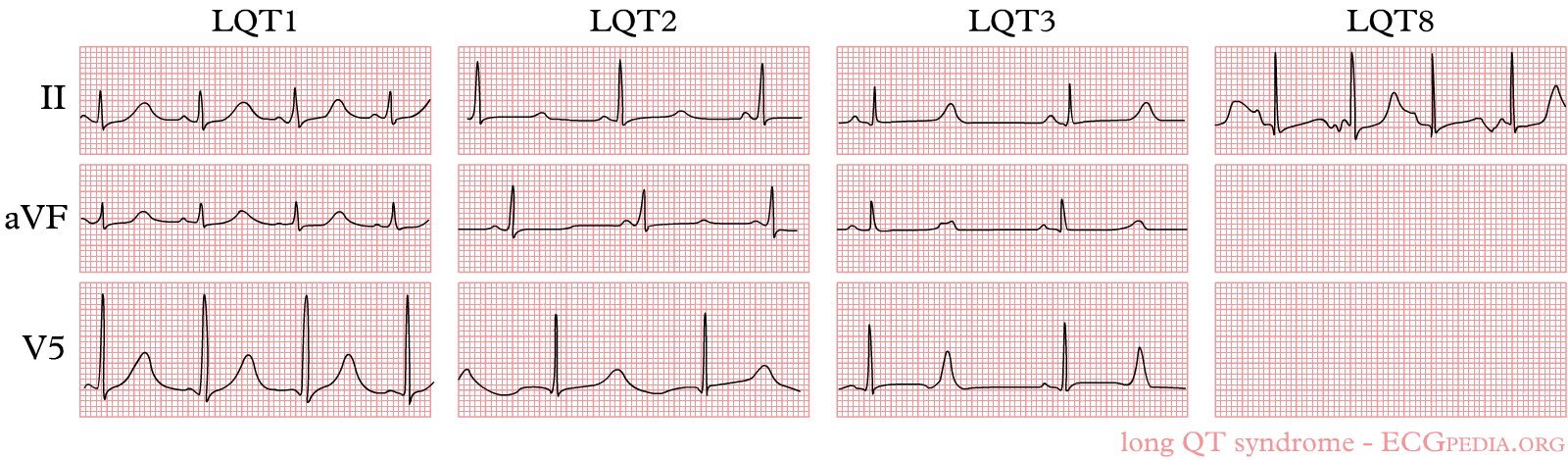
Inheritance: Autosomal dominant (Romano-Ward syndrome, penetrance 25–75% for QTc >460ms); rare autosomal recessive (Jervell-Lange-Nielsen syndrome with congenital deafness, homozygous/compound heterozygous KCNQ1 or KCNE1 variants, nearly 100% penetrance).
Genetic yield: ~75% with comprehensive testing. Up to 25% are gene-elusive, but phenotypic severity mirrors genotype-positive LQTS in these patients (Asatryan et al 2024, Circ Arrhythm Electrophysiol)[8]
ClinGen-validated genes, with genotype-specific management (Zhu et al 2024, Schwartz & Crotti NEJM 2025)[7][2][9]
| Gene / subtype | % Genotype+ | Channel / mechanism | Arrhythmic triggers | ECG pattern | Key management points |
|---|
| KCNQ1LQT1 | ~50% | IKs loss-of-function (K⁺) | Exercise, swimming (adrenergic) | Broad-based T wave | Beta-blockers most effective; nadolol preferred; restrict competitive swimming |
| KCNH2LQT2 | 35–40% | IKr loss-of-function (K⁺) | Auditory triggers, emotion, postpartum | Notched/bifid T wave | Higher risk in females; avoid alarm clocks; K⁺ supplementation; beta-blockers effective |
| SCN5ALQT3 | ~10% | INa gain-of-function (Na⁺ delayed inactivation) | Rest/sleep, bradycardia | Long isoelectric ST segment | Mexiletine (off-label): shortens QTc, reduces events; beta-blockers less effective; pacemaker in selected cases |
| CALM1/2/3Calmodulinopathy | <1% | Calmodulin (impaired Ca²⁺-channel inactivation) | Variable; often de novo | Extreme QTc prolongation | Severe early-onset, very high arrhythmic risk; early ICD; consider LCSD; flecainide may have a role; specialist centre; neurodevelopmental features |
| TRDN– | <1% | Triadin; autosomal recessive | Exercise-triggered | T-wave abnormalities at rest | – |
| CACNA1CLQT8 (Timothy) | Rare | ICaL gain-of-function (Ca²⁺) | – | – | Multiorgan syndrome: ASD, autism, syndactyly; very rare |
Gene-elusive LQTS (~11–25%): Multiple mechanisms, polygenic risk score contribution, environmental QTc modulators, exercise-induced repolarisation abnormalities, new causal genes not yet identified, or variant reclassification over time. Management mirrors genotype-positive LQTS. Referral to specialised cardiogenetic clinic recommended (Asatryan et al 2024)[8].
Modifier genes: Common variants modulate QTc and arrhythmic risk in individual patients, polygenic risk scores can refine risk stratification beyond the primary pathogenic variant (Schwartz & Crotti, NEJM 2025).